Teething: signs, timeline and safe ways to soothe
The first tooth often arrives around six months, but anywhere from three months to after the first birthday is normal.
When teeth come in
Most babies get their first tooth, usually a bottom front tooth, between about 4 and 7 months. The rest arrive gradually, and most children have all 20 baby teeth by about age three.
Common signs
- Drooling more than usual.
- Chewing on hands, toys and anything else in reach.
- Sore, swollen gums.
- Fussiness and some trouble sleeping.
What teething doesn't cause
Teething doesn't cause high fevers, diarrhea, rashes all over the body or serious illness. If your baby has a fever of 100.4°F (38°C) or higher, or seems unwell, call your pediatrician rather than assuming it's teething.
Safe ways to soothe
- Gum massage: rub your baby's gums gently with a clean finger.
- Chilled, not frozen, teething rings: solid rubber or silicone teethers cooled in the fridge.
- Something cold to chew for babies already eating solids, such as a chilled washcloth, while supervised.
- Extra cuddles. Comfort helps too.
- Wipe drool often to prevent a chin rash.
What we mention
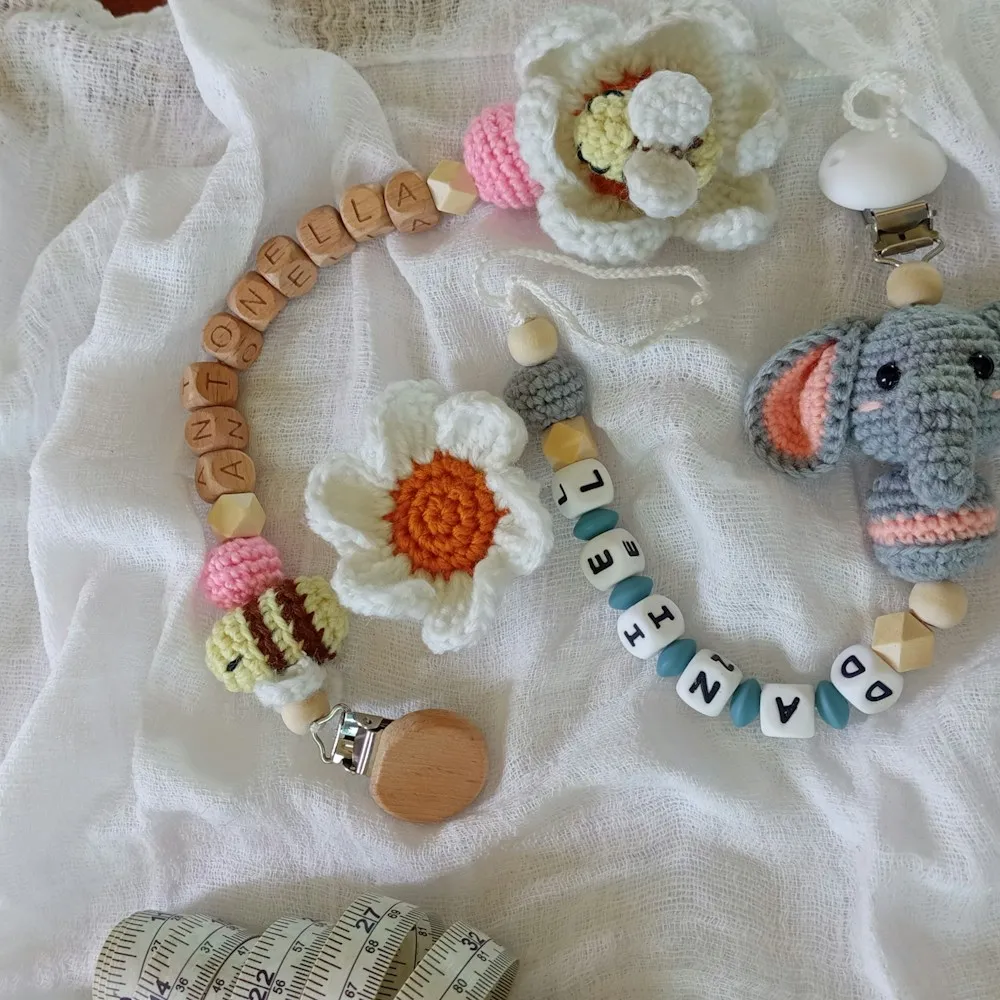
Wooden Pacifier Clip
Keeps the pacifier off the floor. Use only while awake and…

Silicone Catch-All Bib
A soft bib with a deep pocket that catches what misses the mouth, and wipes…

First Board Books Set
Sturdy board books with bright pictures and short words for early reading…
If your baby is very uncomfortable, ask your pediatrician whether a pain reliever is appropriate and at what dose.
Products to avoid
- Teething gels and creams with benzocaine or lidocaine. The FDA warns against these for children under two because of rare but serious side effects.
- Teething necklaces, bracelets and anklets made of amber, wood or other beads. They pose a strangulation and choking risk.
- Homeopathic teething tablets.
- Frozen teethers, which can be too hard on gums.
Pacifier clips
If you use a pacifier clip, use it only while your baby is awake and supervised. Never attach a pacifier to a cord around the neck, and remove clips during sleep.
Caring for the first teeth
As soon as the first tooth appears, brush twice a day with a soft infant toothbrush and a smear of fluoride toothpaste the size of a grain of rice. Schedule a first dental visit by the first birthday.