
Tummy time by age: a simple guide for the first year
Back to sleep, tummy to play. A few minutes at a time, several times a day, builds the strength your baby needs to roll, sit and crawl.
Why tummy time matters
Babies sleep on their backs for safety, so they need awake time on their tummies too. Tummy time strengthens the neck, shoulders, arms and back, which your baby uses later to roll, sit, crawl and pull up. It also helps prevent flat spots on the back of the head.
The newborn weeks
Start in the first days home, while your baby is awake and alert and you're right there. Short sessions of a minute or two, a few times a day, are plenty.
Positions to try:
- Chest to chest: lie back on a couch or bed, propped on pillows, with your baby tummy-down on your chest. Your face is a great motivator to lift the head.
- Across your lap: lay your baby tummy-down across your legs, with a hand on their back.
- Football hold: carry your baby face-down along your forearm, with their head near your elbow and your other hand supporting them.
Around 1–3 months
Move to a clean blanket or mat on the floor. Get down at eye level, talk and sing, or place a toy or an unbreakable mirror just in front of your baby. The AAP suggests building up gradually to a total of about 15 to 30 minutes a day by around 7 weeks, spread across short sessions.
Around 3–6 months
What we mention
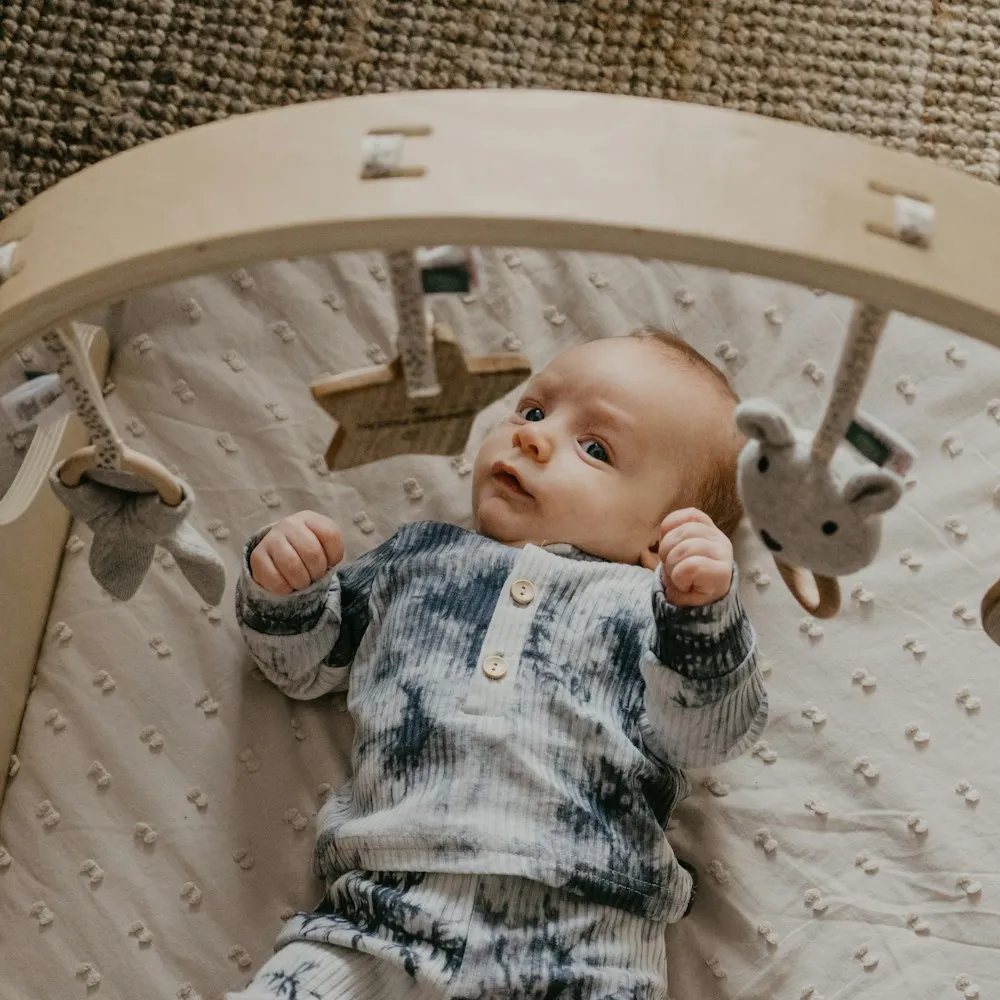
Wooden Play Gym
A simple wooden arch with hanging toys to encourage reaching and tummy…

Cotton Swaddle Blanket
Light, breathable cotton for swaddling the first weeks, then for tummy time,…
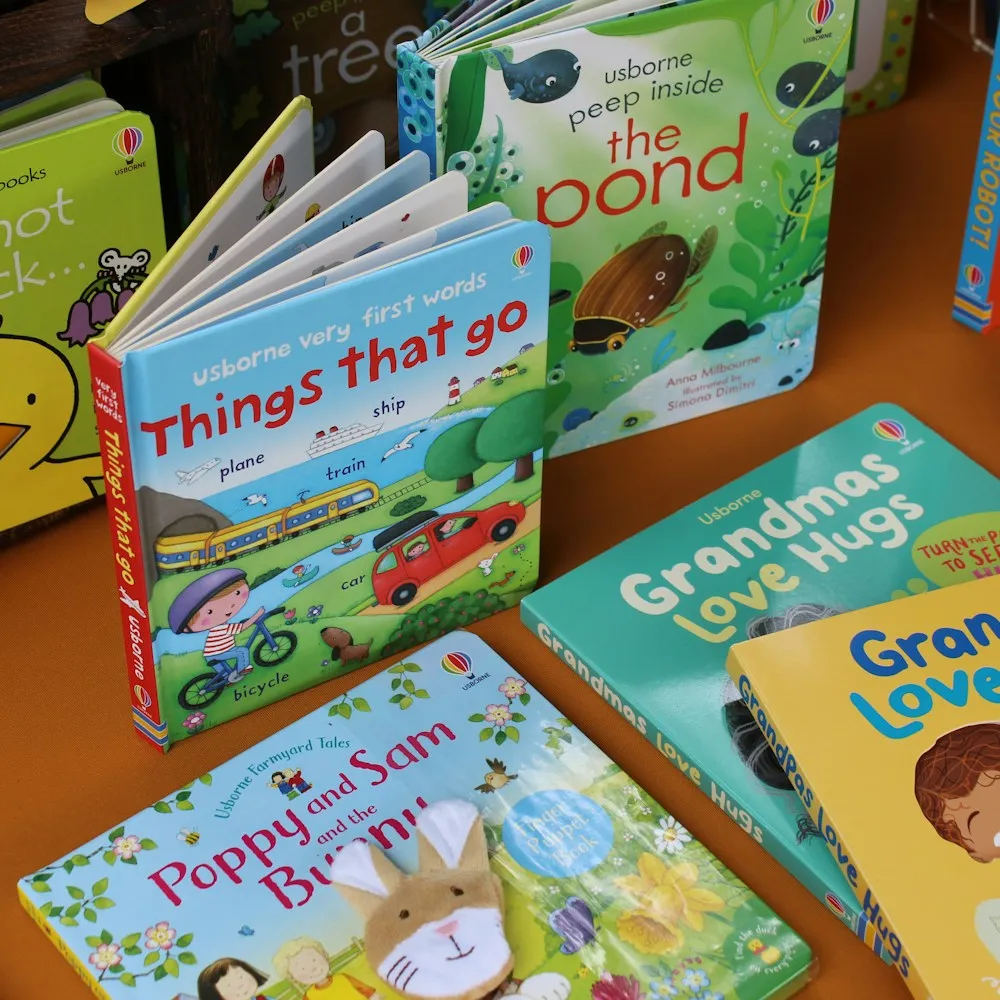
First Board Books Set
Sturdy board books with bright pictures and short words for early reading…
Many babies start to push up on straight arms, look around, and reach for toys. Place toys slightly to each side to encourage reaching and pivoting. A play gym gives babies something interesting to look at and bat. Many babies roll from tummy to back around four to six months.
Around 6–12 months
Tummy time turns into floor play. Babies push up onto hands and knees, rock, scoot, crawl and eventually pull to stand. Give your baby plenty of safe floor space, and keep baby-proofing as they get moving.
If your baby protests
Many babies dislike tummy time at first. That's normal.
- Try after a diaper change or a nap, not right after a feed.
- Keep sessions short and end before tears.
- Roll a small towel under the chest and armpits for a little lift, while supervising.
- Get down at their level. You are your baby's favorite toy.
- Try a different surface, such as your chest, your lap or a firm mat.
Safety
Tummy time is for awake, supervised play only. If your baby gets sleepy, place them on their back in the crib. Ask your pediatrician if your baby always turns their head to one side or you notice a flat spot.