Milestones
Brushing baby's first teeth: when, how and how much toothpaste
Baby teeth hold space for adult teeth and help with chewing and speech. Good habits start with the very first tooth.
Before teeth arrive
Wipe your baby's gums gently with a clean, damp washcloth once or twice a day, especially after feeds. This removes milk and gets your baby used to having their mouth cleaned.
When the first tooth appears
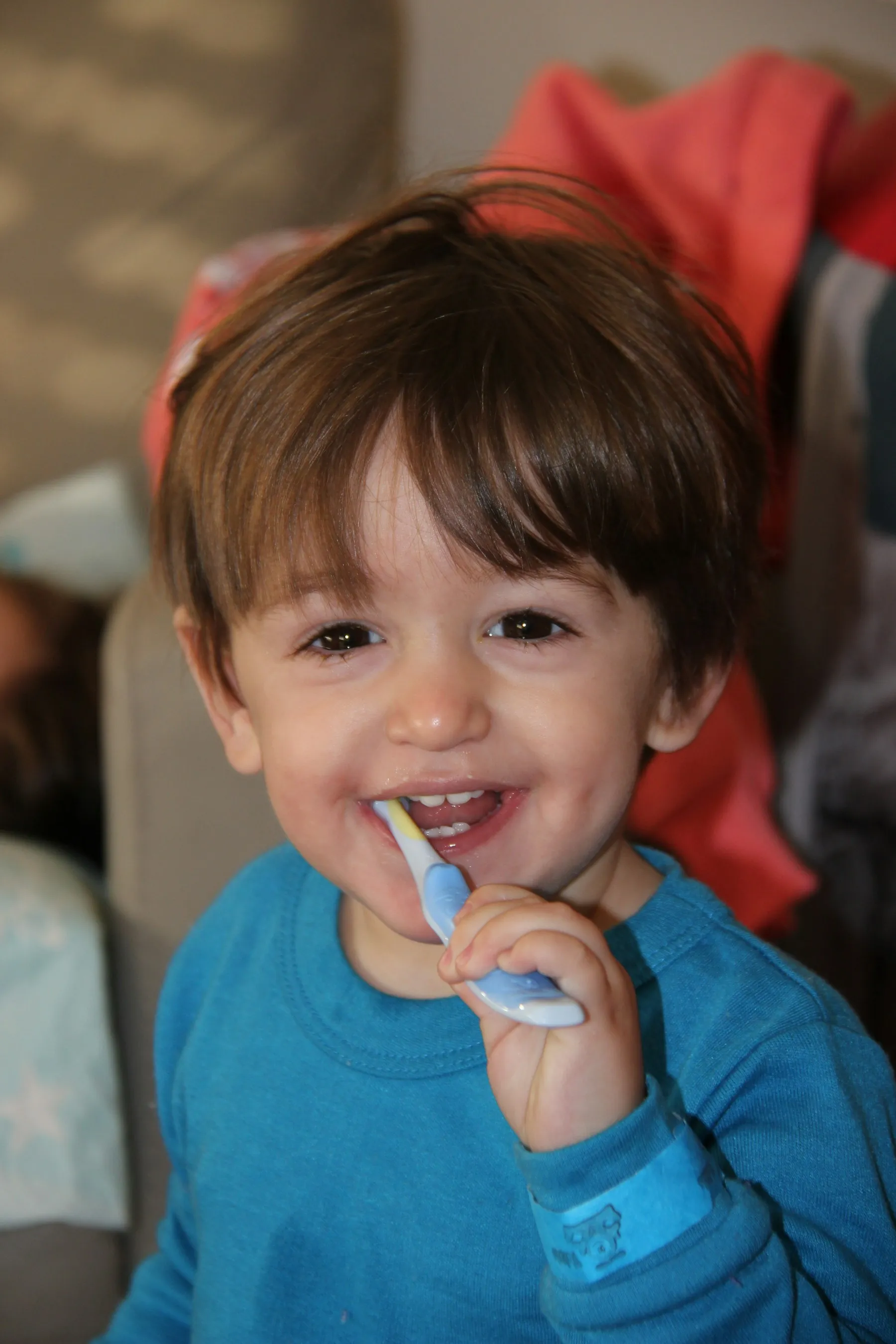
Start brushing twice a day as soon as the first tooth comes in, usually somewhere between 4 and 12 months.
- Use a soft-bristled toothbrush made for infants.
- Under 3: use a smear of fluoride toothpaste about the size of a grain of rice.
- Ages 3 to 6: use a pea-sized amount.
- Brush gently along the gumline, on all sides of each tooth.
- Brush before bed. That last brush of the day is the most important.
Make it easier
- Sit with your baby in your lap, leaning back against you, so you can see into their mouth.
- Sing a two-minute song while you brush.
- Let your toddler "brush" first, then take a turn yourself to finish the job. Most children need help brushing until about age six.
Shop this article
What we mention
Prevent tooth decay
- Don't put your baby to bed with a bottle of milk, formula or juice. Milk pooling around the teeth overnight can cause decay.
- Offer water between meals, and save sweet foods for mealtimes.
- Move from a bottle to a cup around the first birthday.
- Don't dip pacifiers in sugar or honey.
- Avoid sharing spoons or cleaning a pacifier in your mouth, which can pass cavity-causing bacteria.
First dental visit
The AAP and pediatric dentists recommend a first dental visit by the first birthday, or within six months of the first tooth. Your pediatrician may also apply fluoride varnish at well-child visits.
Watch for
Call your dentist or pediatrician if you see white or brown spots on the teeth, which can be early signs of decay.
This article is general information, not medical advice. Every baby is different. Ask your pediatrician about your own child.