Starting solids: signs your baby is ready and what to offer first
Most babies are ready for their first tastes around six months. The readiness signs matter more than the date on the calendar.
When to start
The AAP and CDC recommend introducing foods other than breast milk or infant formula at about six months of age. Starting much earlier isn't recommended, and every baby develops at their own pace, so look for the signs below and check with your pediatrician at the six-month visit.
Signs your baby is ready
- Sits up with little or no support.
- Has good head and neck control.
- Opens their mouth when food comes near.
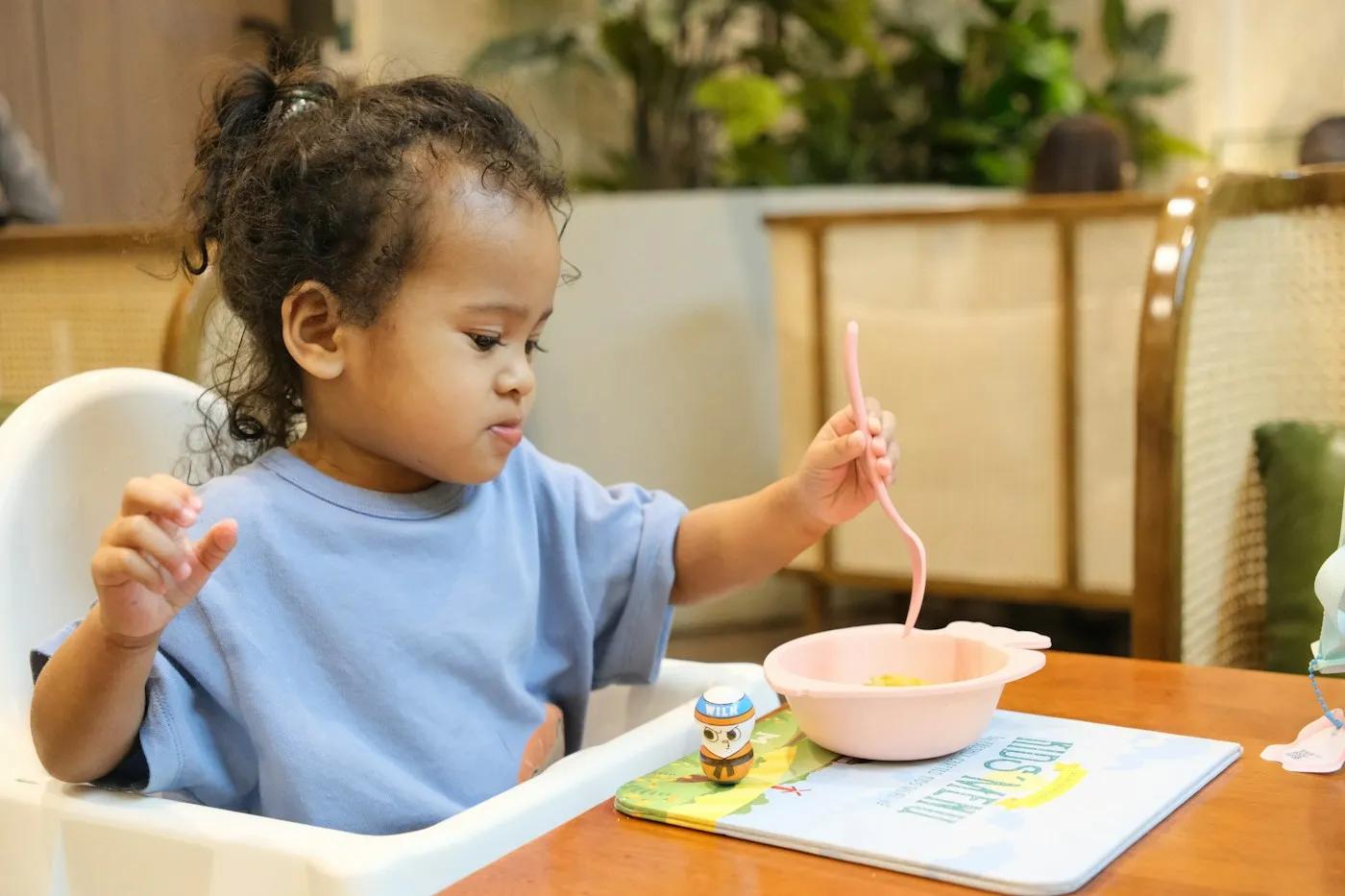
- Can move food from the front of the mouth to the back and swallow it, rather than pushing it out with the tongue.
- Shows interest in what you're eating.
What to offer first
There's no single right first food. Good starting points:
- Iron-rich foods. Babies' iron stores run low around six months. Iron-fortified infant cereal, pureed meat, beans and lentils are good sources.
- Vegetables and fruits like sweet potato, avocado, peas, banana and pear, cooked soft and mashed or pureed.
- Variety. Offering different flavors and textures early may make children more willing to try new foods later.
Breast milk or formula is still your baby's main source of nutrition for most of the first year. Solids start as small tastes, one or two teaspoons, and grow from there.
Common allergens
What we mention
 New
Modern High Chair
A small-footprint high chair with a removable tray and a five-point…
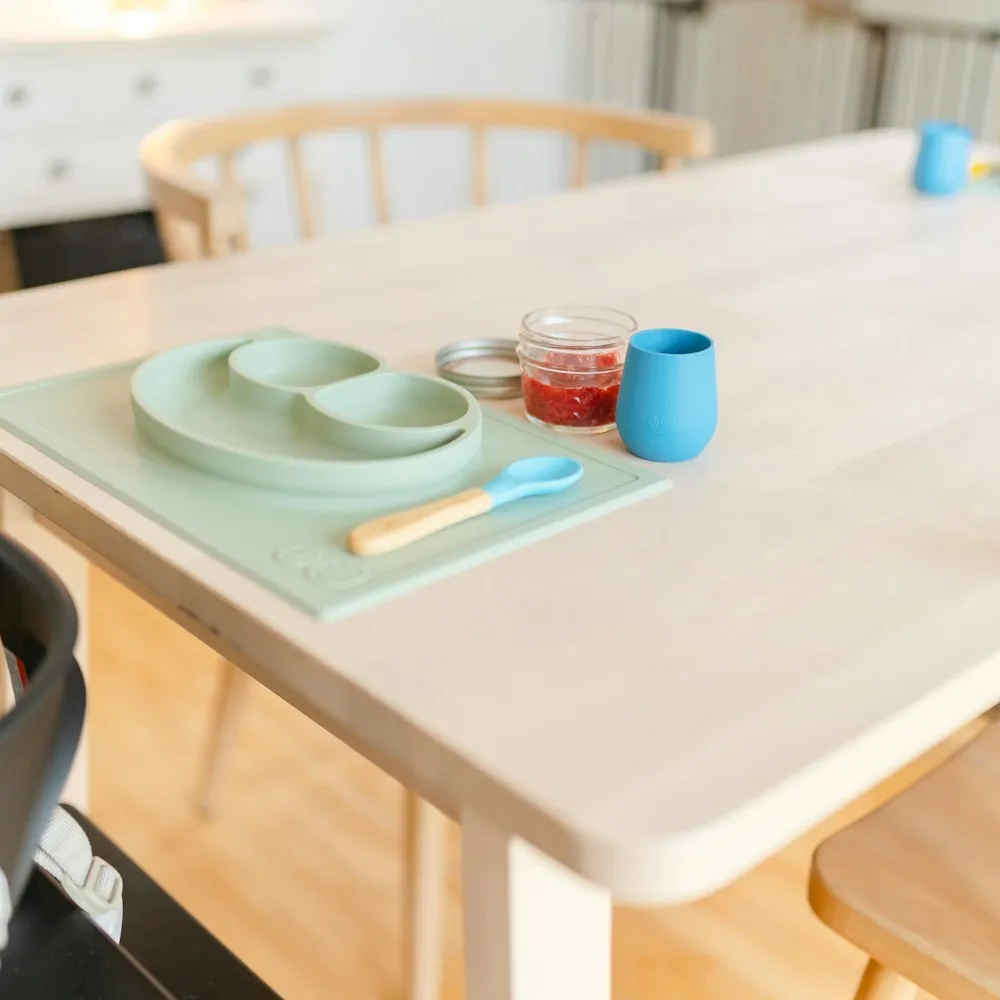
Silicone Suction Plate Set
A divided suction plate, bowl, cup and spoon for the first months of solid…
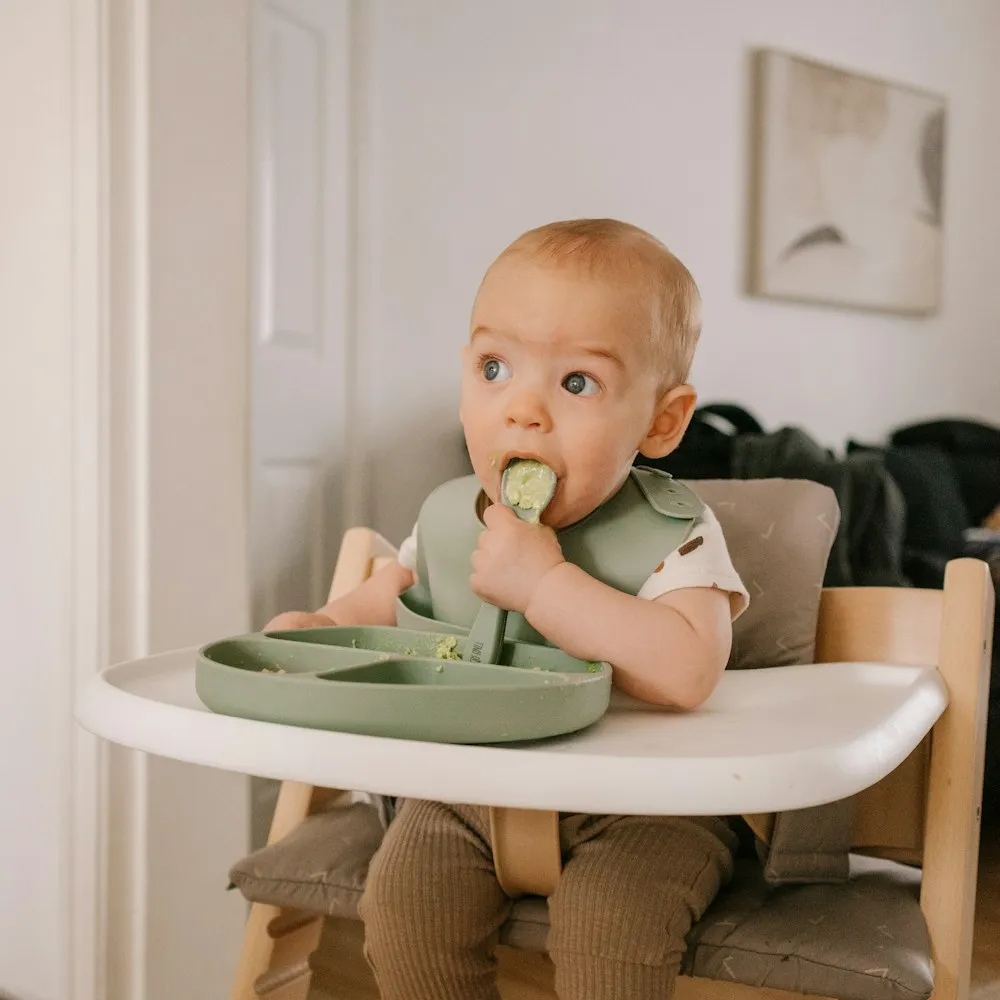
Silicone Catch-All Bib
A soft bib with a deep pocket that catches what misses the mouth, and wipes…
Current guidance supports introducing common allergenic foods, such as peanut, egg, dairy, soy, wheat, tree nuts, fish and shellfish, early, once your baby has started other solids. Early introduction of peanut may lower the risk of peanut allergy. Give peanut as thinned peanut butter or a peanut powder mixed into puree, never as whole nuts. If your baby has severe eczema or a known egg allergy, talk with your pediatrician before introducing peanut.
Textures and finger foods
Move from smooth purees to mashed and lumpy textures, then soft finger foods, as your baby shows they can handle them. Many babies can pick up soft pieces by around eight or nine months. Soft finger foods should squish easily between your thumb and finger.
Choking safety
- Always seat your baby upright and stay with them while they eat.
- Avoid whole grapes, whole nuts, popcorn, hard raw vegetables, chunks of meat or cheese, hot dogs and spoonfuls of nut butter.
- Cut round foods such as grapes and cherry tomatoes into quarters lengthwise.
- Gagging is common and normal as babies learn. Choking is silent: if your baby can't cry, cough or breathe, call 911 and give first aid.
Foods to skip in the first year
- Honey, which can cause infant botulism, before age one.
- Cow's milk as a drink before age one. Small amounts in cooking or yogurt are fine.
- Added sugar and salt.
- Juice. The AAP recommends no juice before one year.
Setting up
A stable high chair with a harness, a suction plate or bowl that stays put, and a catch-all bib make the first months less messy. Offer a small open cup with a little water at meals once solids start.