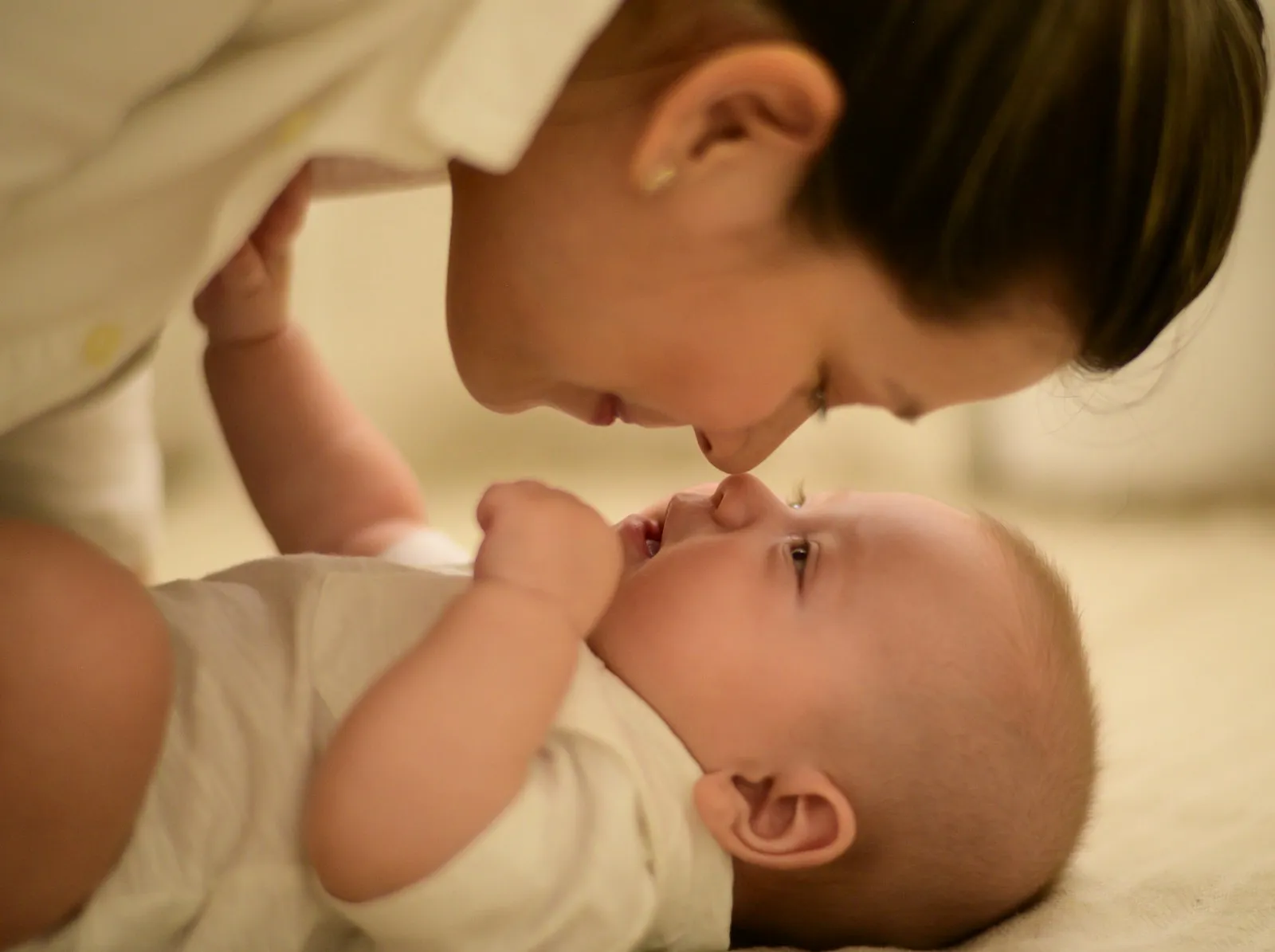
Baby milestones in the first year, month by month
Milestones are the things most babies can do by a certain age. Your baby will set their own pace, and these checkpoints help you know what to watch for.
How to use milestones
The CDC's milestone checklists list skills that most babies, about three out of four, show by a given age. They cover four areas: social and emotional, language and communication, cognitive (learning and thinking), and movement. If your baby was born early, your pediatrician may use their adjusted age.
By 2 months
- Calms down when spoken to or picked up.
- Looks at your face and smiles when you talk or smile.
- Makes sounds other than crying.
- Holds the head up during tummy time.
By 4 months
- Smiles on their own to get your attention, and chuckles.
- Makes cooing sounds and turns toward your voice.
- Holds a toy placed in the hand and brings hands to the mouth.
- Pushes up onto elbows or forearms during tummy time.
By 6 months
- Knows familiar people and likes to look at themselves in a mirror.
- Takes turns making sounds with you, squeals and blows "raspberries."
- Reaches for toys, and puts things in the mouth to explore them.
- Rolls from tummy to back, and leans on hands to support themselves when sitting.
By 9 months
What we mention
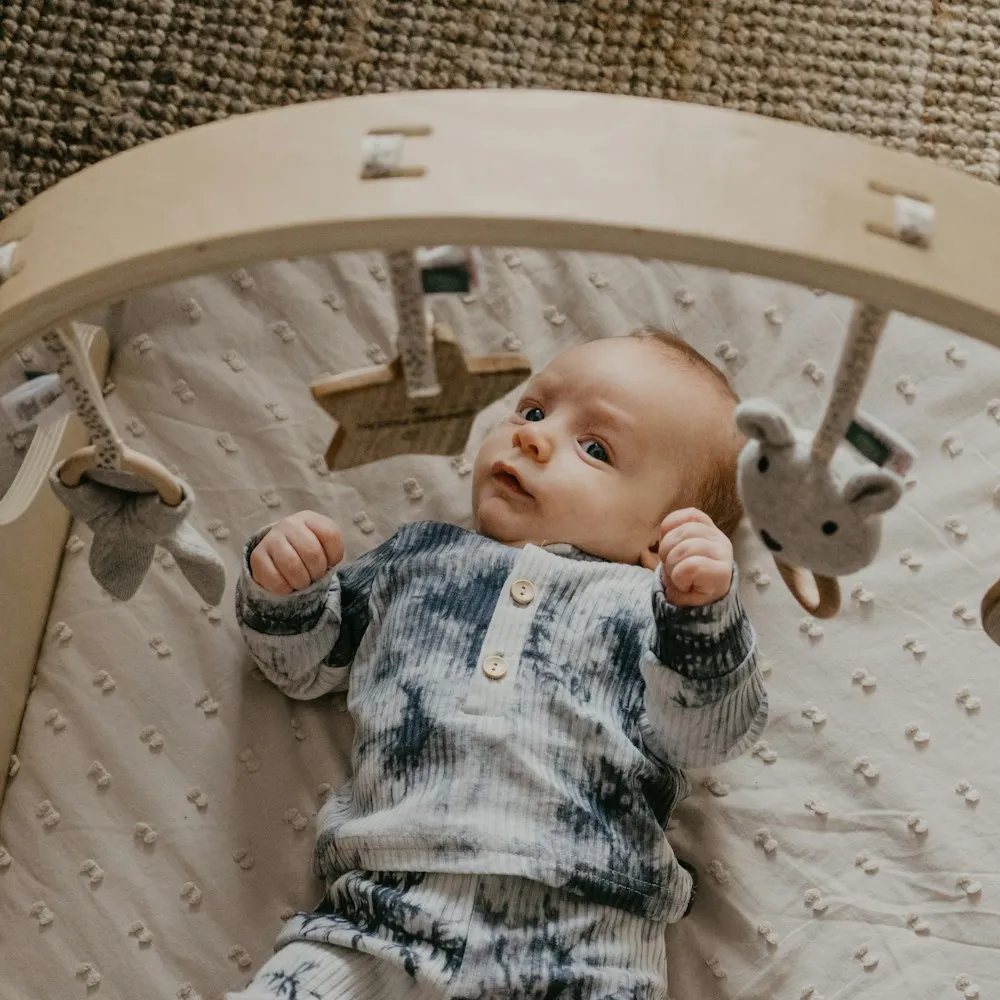
Wooden Play Gym
A simple wooden arch with hanging toys to encourage reaching and tummy…
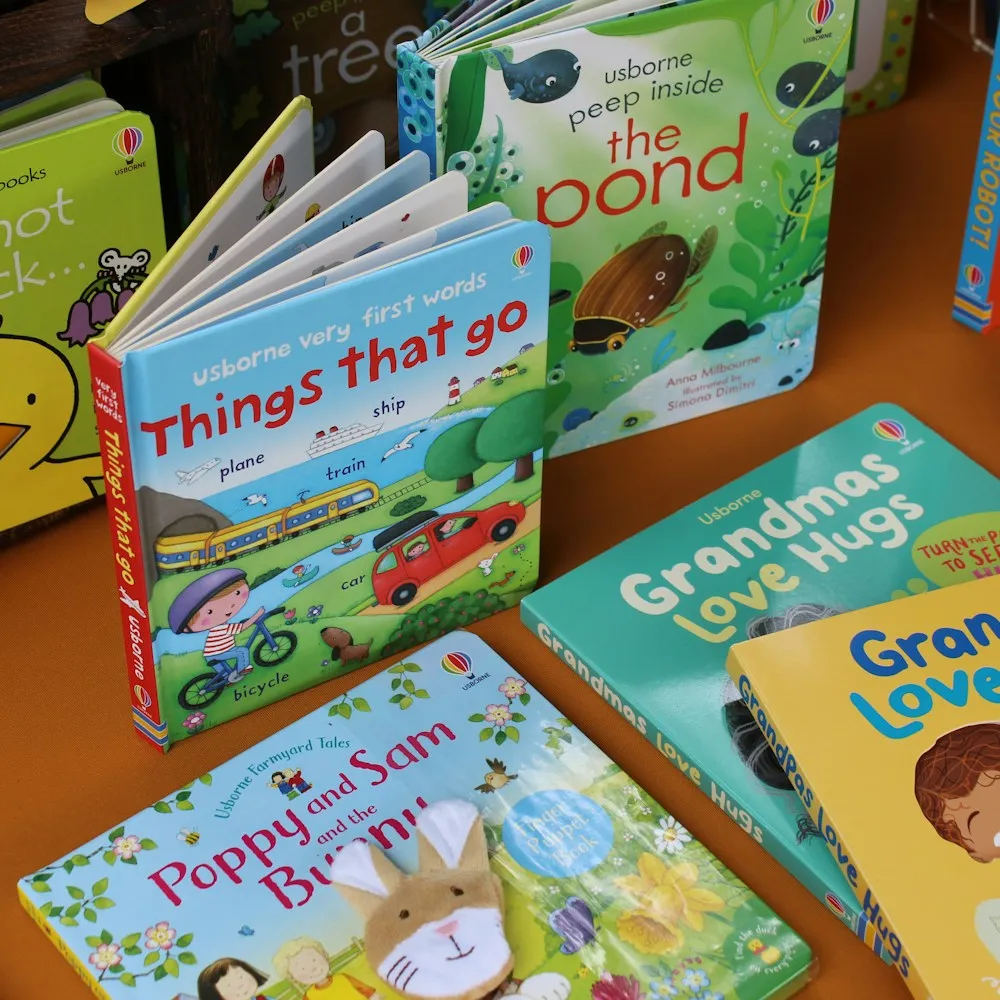
First Board Books Set
Sturdy board books with bright pictures and short words for early reading…

Wooden Stacking Blocks
Plain wooden blocks for stacking, sorting and building first…
- May be shy, clingy or fearful around strangers.
- Reacts when you leave, and shows several facial expressions.
- Makes sounds like "mamamama" and "babababa," and lifts arms up to be picked up.
- Looks for objects when they drop out of sight, and bangs two things together.
- Gets into a sitting position by themselves, and sits without support.
By 12 months
- Plays games with you, like pat-a-cake.
- Waves "bye-bye" and calls a parent "mama," "dada" or another special name.
- Understands "no," pausing briefly when you say it.
- Puts something into a container, like a block in a cup.
- Pulls up to stand and walks holding on to furniture ("cruising").
How to encourage development
- Talk, read and sing to your baby every day, even in the first weeks.
- Give plenty of floor time and tummy time.
- Respond to your baby's sounds and expressions, which teaches them that communication works.
- Offer simple toys like rattles, blocks, board books and stacking cups. Your face and voice matter more than any toy.
When to talk with your pediatrician
Trust your instincts. Talk with your pediatrician if your baby is missing milestones for their age, has lost skills they once had, or if you have any concerns. Developmental screening is part of regular well-child checkups, and early support can make a big difference.