
Gear Guides
Babywearing basics: choosing and using a baby carrier safely
A carrier keeps your baby close and your hands free. Here's how to choose one that fits you both, and how to use it safely.
Types of carriers
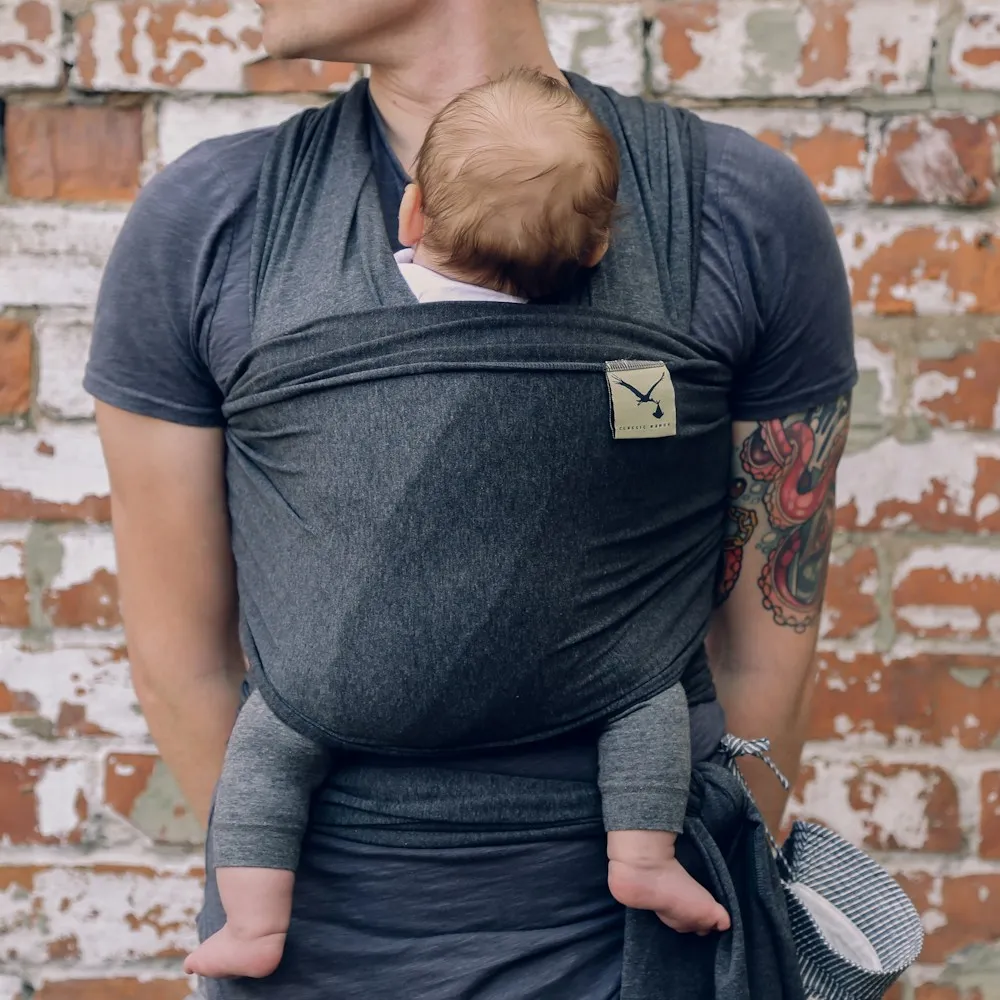
- Stretchy wrap: a long piece of soft fabric tied around you. Snug and cozy for newborns, but takes practice.
- Woven wrap: a sturdier fabric that works from newborn into toddlerhood, with many ways to tie it.
- Ring sling: fabric threaded through two rings, worn over one shoulder. Quick for short carries.
- Soft-structured carrier: buckles and padded straps. Easy to learn. Many adjust for newborns with an insert or setting.
- Frame backpack carrier: for hiking with older babies and toddlers who have good head and neck control.
The TICKS checklist
Babywearing safety groups use the TICKS rule each time you wear your baby:
- Tight: the carrier holds your baby snugly against you.
- In view at all times: you can see your baby's face by glancing down.
- Close enough to kiss: your baby's head is high enough on your chest that you can kiss the top of it.
- Keep chin off the chest: there should be at least a finger's width of space under your baby's chin, so the airway stays open.
- Supported back: your baby's back is supported in a natural position, with tummy and chest against you.
Shop this article
What we mention

Watch the airway
The biggest risk for young babies in carriers and slings is suffocation. Babies under four months, premature babies and babies with breathing problems are most at risk. Never let fabric cover your baby's face, and check on your baby often.
Hip-healthy positioning
Look for a carrier that supports your baby's thighs from knee to knee, with knees higher than the bottom and legs in a natural "M" position. Avoid carriers that leave the legs dangling straight down from a narrow seat for long periods.
Choosing a carrier
- Try before you buy if you can. Fit varies with body shape.
- Check the weight range and the newborn position.
- Look for breathable fabric if you live somewhere warm.
- Make sure both parents can adjust it easily, if you'll share it.
Everyday safety
- Bend at the knees, not the waist, when picking things up.
- Don't cook, drink hot drinks or ride in a car with your baby in a carrier. Use a car seat in the car.
- Check buckles, seams and fabric regularly for wear.
- Check for recalls, especially for slings and secondhand carriers.
This article is general information, not medical advice. Every baby is different. Ask your pediatrician about your own child.